
The war that consumed a generation
The first thing that came to my mind while visiting the exhibition about the First World War at the Imperial War Museum in London was the novel All Quiet on the Western Front by Erich Maria Remarque. The book shows the cruelty and absurdity of war through the experiences of a young German soldier, Paul Bäumer. Eighteen- and nineteen-year-old boys are sent to the front almost immediately after finishing school, encouraged by their teachers to serve their country. They soon realise, however, that they are shooting at boys their own age who, like them, miss home and long for peace. They begin to question the point of the war. The brutality of war takes away their sense of humanity and, in the end, their lives, turning them into a ‘lost generation’. The powerful way the author presents the characters’ emotions, the violence of the attacks and the constant presence of death mean that All Quiet on the Western Front still shocks readers today.
We are forlorn like children, and experienced like old men, we are crude and sorrowful and superficial – I believe we are lost.
Erich Maria Remarque, All Quiet on the Western Front
The first Christmas of World War I
However, one object at the exhibition held my attention for longer. It was a button – a symbol of a brief ceasefire, of brotherhood and of humanity in the middle of the cruelty of World War. It is a reminder of the events of late 1914, known as the Christmas Truce.
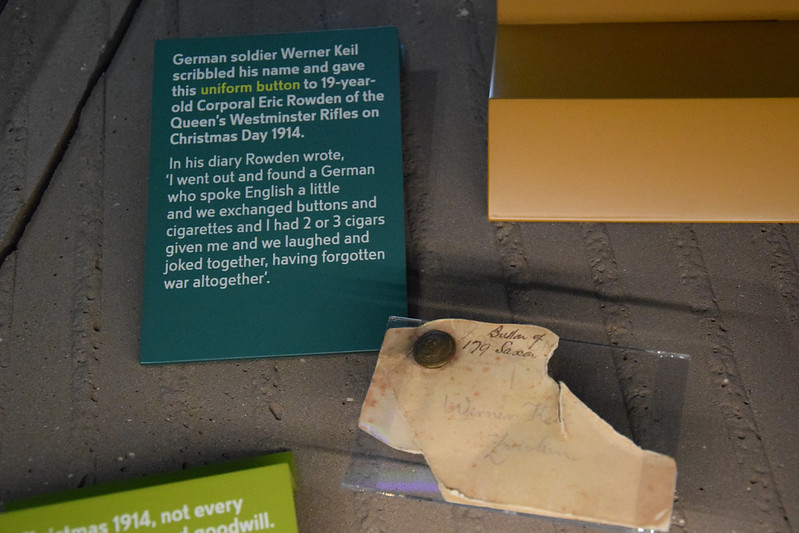
The exhibit label reads: ‘German soldier Werner Keil scribbled his name and gave this uniform button to 19-year-old Corporal Eric Rowden of the Queen’s Westminster Rifles on Christmas Day 1914. In his diary, Rowden wrote, “I went out and found a German who spoke English a little, and we exchanged buttons and cigarettes, and I had 2 or 3 cigars given me, and we laughed and joked together, having forgotten war altogether”.’
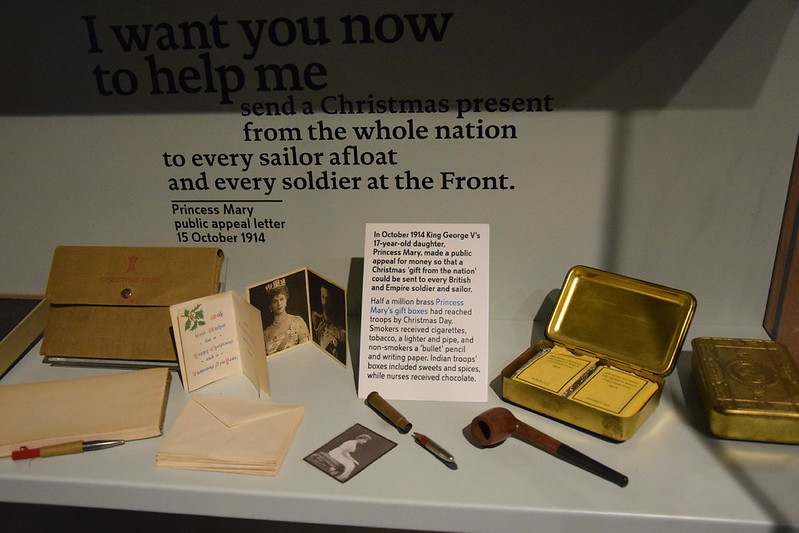
Moments of peace – carols, gifts and fraternisation
On Christmas Eve, December 24, 1914, British, German, and French soldiers on the Western Front chose to disregard explicit orders from their superiors, as well as the threat of consequences such as court-martial and even execution. They bravely emerged from their trenches, laid down their weapons, and celebrated the holiday together. Diaries and other accounts from that time describe football games, the singing of Christmas carols, the exchange of gifts, Bible readings, and even shared meals with the enemy.
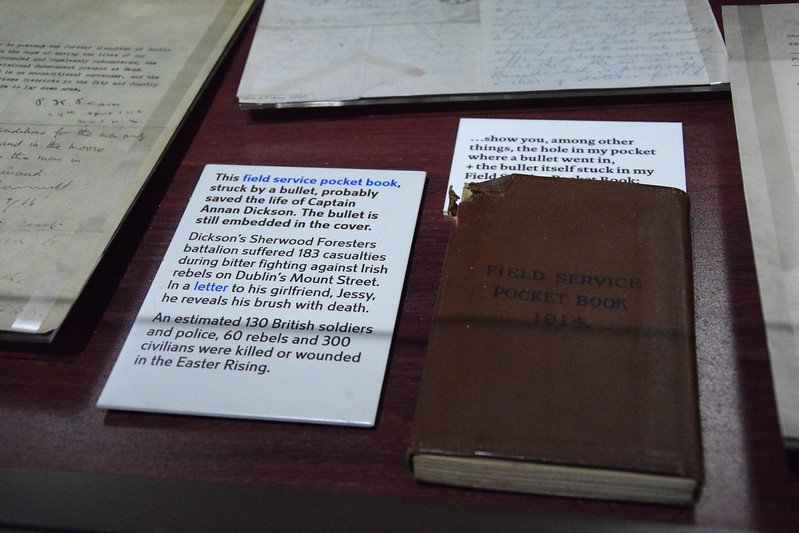
Behind the trenches — reactions and aftermath
High Command Was Furious. The Truce deeply alarmed military leaders on both sides. Officers issued strict orders afterwards forbidding any fraternisation, and in many sectors the truce was never repeated. By Christmas 1915, the tone of the war had hardened dramatically – gas attacks, heavy artillery, and massive casualties made a similar ceasefire impossible.
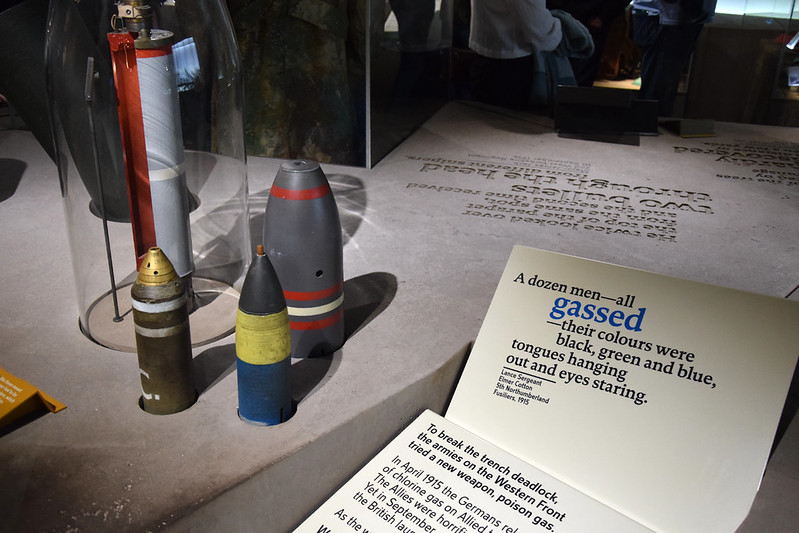
A word of command has made these silent figures our enemies; a word of command might transform them into our friends. At some table a document is signed by some persons whom none of us knows, and then for years together that very crime on which formerly the world’s condemnation and severest penalty fall, becomes our highest aim.
Erich Maria Remarque, All Quiet on the Western Front
Remembrance and cultural legacy
Many books have been published about the 1914 Christmas Truce. Among the most notable are Truce: The Day the Soldiers Stopped Fighting by Jim Murphy and Silent Night: The Story of the World War I Christmas Truce by Stanley Weintraub.
One of the most popular poems capturing the spirit of that night is Carol Ann Duffy’s The Christmas Truce.
[…]
All night, along the Western Front, they sang, the enemies –
carols, hymns, folk songs, anthems, in German, English, French;
each battalion choired in its grim trench.
So Christmas dawned, wrapped in mist, to open itself
and offer the day like a gift
for Harry, Hugo, Hermann, Henry, Heinz … with whistles, waves, cheers, shouts, laughs.
[…]
Carol Ann Duffy, The Christmas Truce
The events of that remarkable evening have inspired not only historians, writers, and poets but also artists in popular culture. The Christmas Truce of 1914 is referenced in songs such as Pipes of Peace by Paul McCartney, All Together Now by The Farm, Christmas Truce by Sabaton, and Christmas in the Trenches, a beautiful and moving ballad by John McCutcheon.
In 2014, Sainsbury’s released a Christmas advertisement recalling events from 100 years earlier.
If you find my work valuable, you can support it here:
